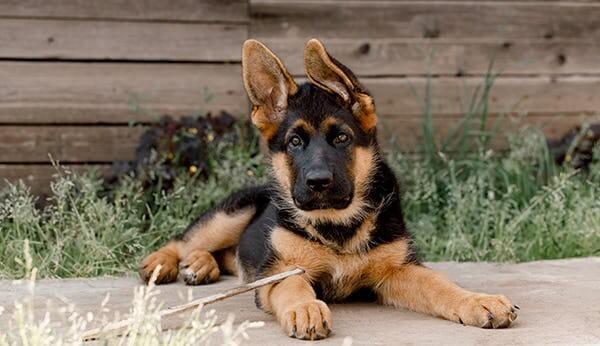
German Shepherd
The German Shepherd is widely regarded as one of the most versatile working dog breeds in the world. According to the American Kennel Club¹, the German Shepherd is “generally considered dogkind’s finest all-purpose worker” — a large, agile, muscular dog known for loyalty, intelligence, and steady temperament. They currently rank as the fourth most popular breed² in the United States. Equally capable as a family companion, service dog, or working partner, the German Shepherd rewards committed pet parents with deep loyalty — but demands consistent training, substantial daily exercise, and thoughtful health management.
Breed Profile

Height
Male: 24-26
Female: 22-24
Inches

Weight
Male: 65-90
Female: 50-70
Pounds

Life Span
7 - 10
Years

Personality
According to the American Kennel Club¹, German Shepherds are loyal, confident, courageous, and steady. Key traits:
Confident — German Shepherds carry themselves with assurance and are not easily rattled. This self-possession makes them effective working and protection dogs
Loyal — They form deep, lasting bonds with their families and are known for unwavering devotion
Intelligent — Ranked among the most intelligent dog breeds, German Shepherds learn quickly and retain commands well
Energetic — High-drive dogs that need both physical exercise and mental challenge to stay balanced and well-behaved
Protective — German Shepherds are naturally watchful and may be reserved with strangers. Early socialization is essential to channel this instinct appropriately
German Shepherds are deeply connected to their pet parents and do not thrive when isolated or understimulated. Without adequate exercise and engagement, they can develop anxiety, excessive barking, or destructive behaviors.
Appearance & Size
Height: Male 24–26 inches | Female 22–24 inches
Weight: Male 65–90 pounds | Female 50–70 pounds
Life Span: 7–10 years
Coat: Medium-length double coat — dense, straight outer coat with a thick undercoat
Colors: Black and tan, black and red, sable, solid black, black and silver, black and cream, bicolor
The German Shepherd is a large, well-muscled, athletic dog with a distinctive profile — erect ears, alert expression, and a gently sloping back. Their dense double coat sheds heavily year-round and is not hypoallergenic. German Shepherds are among the heaviest-shedding breeds.
Training & Behavior
German Shepherds are among the most trainable dog breeds, and consistent early training is both the best investment and a genuine necessity with this breed. Their intelligence and work drive mean they learn commands quickly — but those same qualities make them difficult to manage without structure. Positive reinforcement works well; harsh corrections are counterproductive and can undermine trust.
German Shepherds thrive with a clear role and regular job to do. Training classes, structured obedience work, and canine sports all channel their drive constructively. They excel in environments that challenge them and reward performance. First-time pet parents should plan to invest in professional training support, as a large, under-trained German Shepherd can be genuinely difficult to handle.

Lifetime Care
Coat
German shepherds have a medium-length, double-layered coat. The outer coat is coarse, but the inner coat is smooth. They shed a lot, so you should expect to vacuum often.
Colors
Blue, white, gray, black, black and silver, black and cream, black and tan, black and red, bi-color, sable, liver.
Hypoallergenic
German shepherds are not hypoallergenic.
Grooming
Brushing every few days, as well as regular teeth cleaning and nail clipping
Training
Intelligent and ready to please, the German shepherd is easy to train, although classes might be helpful for socialization and first-time dog owners.
German shepherd: Dog Breed Information Guide 2022
One of the most popular dog breeds, the German shepherd is famous for being a hard worker and an excellent protector. They are popular dogs for service in the public sphere and the military.
If you’re thinking about adopting a German shepherd, there are many things that you need to consider. German shepherds are high-energy working dogs, so they require a lot of care and effort.
Here at Spot Pet Insurance, we understand there’s a lot that goes into adopting a pet. Each breed has its own unique set of needs. Our goal is to help you learn about your new pet so you can be prepared.
Before you adopt, it’s important to determine how well you and your pet will be able to get along. You need to have a lifestyle that will be able to fit the needs of your pet, so you both can be happy together.
By providing educational resources for prospective pet parents, we hope to be able to help pets find homes that will work for them, and by giving you tips and tricks, we can help you learn how to keep your pup happy.
If you’re thinking about adopting a German shepherd but aren’t sure about what is required to be a good pet parent for a German shepherd, continue reading to learn more.
German shepherd: An introduction to the breed
German shepherds are large dogs. They have a very distinctive and well-known look. Even German shepherd puppies look strong and confident. Their ears and tails stick up, making them look alert and ready to go.
German shepherds have a medium-length double coat. Their coats are usually a variation of two different colors, especially black, tan, or red. They don’t have any official markings, but the most famous version of the German shepherd has black tips and black spots on its back.
The history of the German shepherd
The German shepherd was developed as a breed in the late 1800s in, as you’ve probably guessed, Germany. Shepherds were looking for a dog who could help them herd and protect their sheep.
A German captain by the name of Max von Stephanitz decided that he would try to find the ultimate sheepdog that had the traits necessary to herd sheep in Germany. In 1899, he located a dog that he called Horand von Grafrath, who became the father of the German shepherd breed.
Captain von Stephanitz trained Horand and his offspring, and they were quickly able to herd sheep. Unfortunately, large herds of sheep were becoming less common around this time. The captain switched gears and began to train German shepherds as military and police dogs. During WWI, the German shepherd became famous.
Before WWI and their rise to fame, German shepherds were accepted by the American Kennel Club (AKC) in 1908. During World War I, their name was changed to shepherd dog in the United States to remove their association with Germany. Their popularity grew as their activities during the war were described by the soldiers that returned home. Some of the dogs returned to the United States with the soldiers, like the famous Rin Tin Tin.
Rin Tin Tin went on to star in movies alongside a shepherd named Strongheart. In the mid-1920s, the German shepherd was the most popular dog in the United States, although they lost that title around ten years later. Today, German shepherds often serve as guide dogs and search and rescue dogs, and they’re often involved in police work.
What kind of care do German shepherds need?
It’s important to know your pet’s habits and needs so you can properly provide for them. Some pets need more care in some areas, and others have different needs. Depending on the breed, you will need to spend more time grooming, playing, or training.
The German shepherd does need some grooming, but not as much as a dog with long hair.
How much training does a German shepherd need?
They will definitely need plenty of training to keep them active mentally, and so they know how to behave in public.
They need to be well socialized too. To socialize a German shepherd, you should introduce them to new people, places, and dogs as they grow older. If a dog is isolated, they can become aggressive and antisocial.
Basic commands like sit, stay, come, and heel are great to start your pup’s training with, but you need to build on that to ensure they get enough mental stimulation. Otherwise, they might get bored, and bored dogs are not good for furniture or shoes.
To train your German shepherd, you can take them to a class or teach them yourself, but you need to be firm and sweet. You can’t give into
Do German shepherds get along with children?
If you have children, you might be curious about how your German shepherd will be able to handle having them poke and prod them the most of the time. Fortunately, German shepherds are great with kids.
German shepherds are famous for their work ethic, so they are often used by services that need dogs. They can work in the military or with the police. They can be service dogs, or they can be herding dogs if necessary.
What are some of the German shepherd’s health issues?
All dogs can have illnesses that they can get or inherit from their parents. Fortunately, reputable breeders try to prevent hereditary conditions from being passed.
Some of the health conditions a German shepherd can have are hip dysplasia, elbow dysplasia, exocrine pancreatic insufficiency, von Willebrand’s Disease, degenerative myelopathy, and pannus.
We understand that these issues are pretty intimidating, especially if you’re new to being a pet parent. We wish we could help prevent these issues, but the most we can do is help by giving you the information you need about each one to try to prepare you.
What kind of exercise does a German shepherd need?
Make sure your German shepherd gets enough mental and physical exercise, so they don’t get antsy or restless. Good ways to exercise your pup are taking them for a walk, playing fetch or other games with them, hiking, or going for a jog.
Good mental exercises for your German shepherd would be obedience training, tracking, herding, or agility training. You could also combine physical and mental exercise with activities like agility training and herding.