Quick Glance
How much they sleep | 16–20 hours per day — puppies need significantly more sleep than adult dogs. |
Nap frequency | Every 1–2 hours of activity; very young puppies may nap every 30–60 minutes. |
Nighttime sleep | Puppies can sleep 6–10 hours at night by 4 months; expect interruptions before then. |
Crate training | One of the most effective tools for establishing a healthy sleep routine. |
Overtiredness sign | Frantic biting, whining, zoomies — your puppy needs a nap, not more playtime. |
You brought home an 8-week-old puppy expecting chaos — and then they fell asleep for three hours, and you panicked. Is something wrong? Almost certainly not. Puppies sleep a lot, and for good reason. Understanding how much sleep your puppy needs — and building a consistent schedule — is one of the most important things you can do in those early weeks.
How Much Do Puppies Sleep?
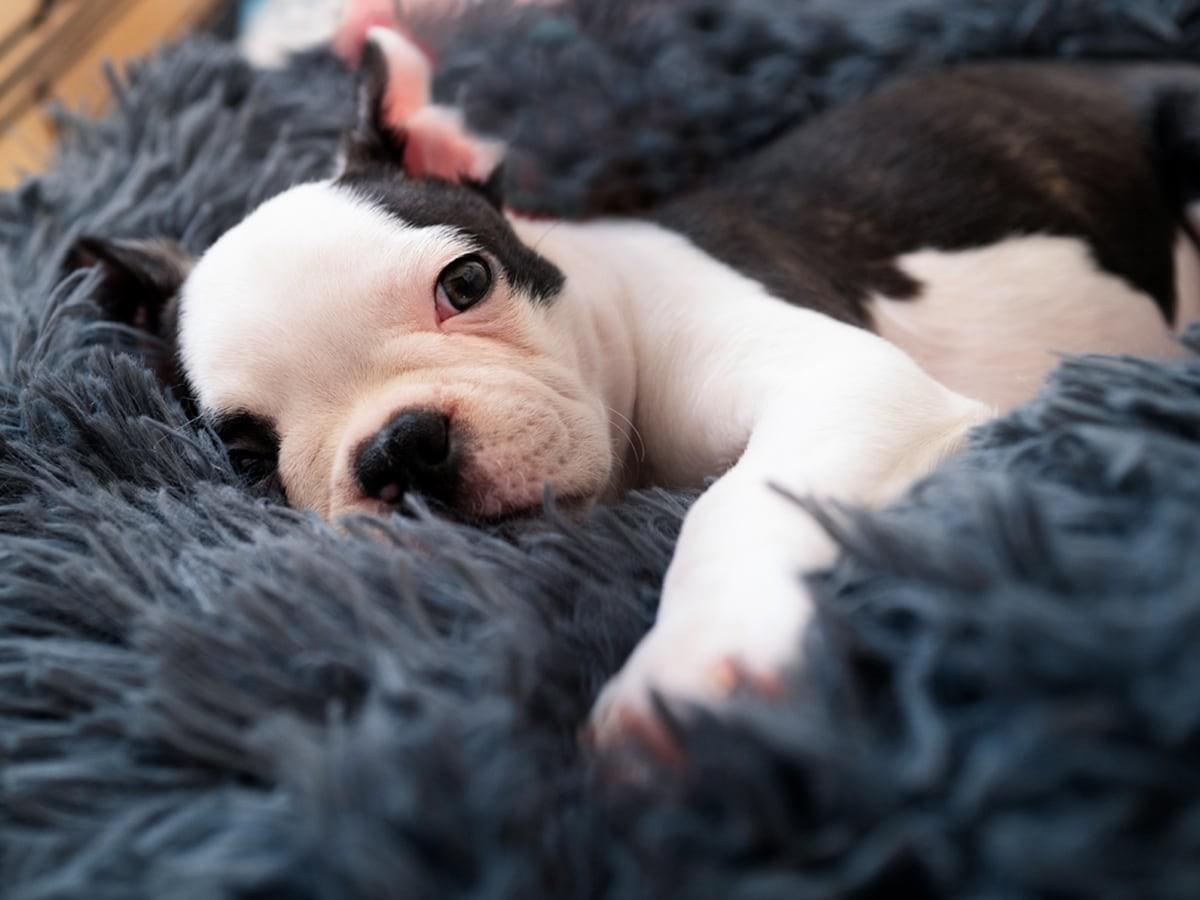
Young puppies sleep between 16 and 20 hours per day.¹ That's not a mistake — they really do spend the vast majority of their time asleep. Sleep is when the brain processes new experiences, the body grows, and the immune system develops. A puppy that doesn't get enough sleep can be overtired, reactive, and much harder to train.
As puppies age, their total sleep gradually decreases:
Age | Total Daily Sleep | Nap Pattern |
8–10 weeks | 18–20 hours | Every 30–60 min of activity |
10–12 weeks | 16–18 hours | Every 1–2 hours of activity |
3–4 months | 15–17 hours | 2–3 longer naps daily |
4–6 months | 14–16 hours | 2 naps daily + longer overnight sleep |
6–12 months | 12–14 hours | 1–2 naps daily; more adult-like pattern |
Sample Puppy Sleep Schedule (8–12 Weeks)
Every puppy is different, but this general framework can work well for young puppies in their first weeks home:1
Time | Activity |
7:00 AM | Wake up, outside immediately, breakfast |
7:30–8:30 AM | Play and training time |
8:30–10:00 AM | Nap in crate |
10:00 AM | Outside, short play/training session |
11:00 AM–12:30 PM | Nap in crate |
12:30 PM | Lunch, outside, play |
1:30–3:00 PM | Nap |
3:00 PM | Outside, play, socialization |
4:30–6:00 PM | Nap |
6:00 PM | Dinner, outside, calm play |
7:30–9:00 PM | Nap |
9:00 PM | Final outside trip, settle for bed |
9:30 PM–7:00 AM | Overnight sleep (with 1–2 bathroom breaks for young puppies) |
Setting Up a Healthy Sleep Routine
Crate Train Your Puppy
A crate is one of the most effective sleep tools for puppies. It provides a safe, den-like space where your puppy can rest without supervision. When introduced positively — never as punishment — most puppies quickly come to see their crate as a comfortable retreat. You can keep the crate in your bedroom initially so your puppy can hear you and you can respond to nighttime wake-ups.
Watch for Overtiredness
An overtired puppy usually looks and acts worse than a tired one. The most common signs of an overtired puppy are:
Frantic biting or zoomies that escalate rather than calm down
Whining or barking without clear cause
Difficulty settling despite being in a quiet environment
When you see these signs, resist the urge to give more stimulation. Put your puppy in their crate with a chew toy and let them sleep.
Manage Nighttime Wake-Ups
Young puppies (8–12 weeks) cannot hold their bladder overnight and will wake once or twice to go outside. This is normal. Take them out quietly and calmly — no play, minimal light, straight back to the crate. By 3–4 months, most puppies can sleep 6–8 hours at a stretch if they've had sufficient activity and a pre-bedtime bathroom trip.2
When to Be Concerned
Contact your vet if your puppy is sleeping significantly more than expected AND showing other symptoms such as loss of appetite, lethargy when awake, vomiting, or diarrhea. Excessive sleep with other symptoms can indicate illness. On its own, lots of sleep is completely normal.
Frequently Asked Questions: Puppy Sleep
Is my puppy sleeping too much?
Probably not. 16–20 hours of sleep per day is completely normal for young puppies. As long as they're alert, playful, and eating well during their awake periods, the amount of sleep shouldn’t be a concern.
When do puppies start sleeping through the night?
Most puppies can sleep 6–8 hours at night by 3–4 months of age, with consistent crate training. Very young puppies (8–10 weeks) usually wake 1–2 times to go outside.2
Should my puppy sleep in a crate?
Crate sleeping is highly recommended for young puppies. It helps with house-training, prevents destructive behavior overnight, and gives your puppy a safe, consistent sleep space.2 Ensure the crate is the right size (just large enough to stand, turn, and lie down), with comfortable bedding.
My puppy won't nap. What do I do?
Some puppies resist napping even when overtired — they don't want to miss anything. Put them in their crate anyway. Most puppies will settle within a few minutes once in a dark, quiet space. Covering the crate with a blanket can help signal that it's rest time.
The information presented in this article is for educational and informational purposes only and does not constitute or substitute for the advice of your veterinarian.

We’re pet parents first—and writers, marketers, and product developers by trade—combining lived experience with industry expertise in everything we create.